
The Karisoke research group that has been hassled for weeks now by various lone silverbacks has been reported missing for the third day in a row by field staff. Inshuti’s group was last located on Thursday, February 2nd. Two patrol teams, with the support of the anti-poaching rangers, were dispatched to search for the missing group Saturday, Sunday and Monday but unfortunately, they were unable to find a trace of them. Tomorrow, the teams will thoroughly comb the five Basumba Hills where Inshuti’s group normally ranges...
To read the rest of the Fossey Fund blog post from today, please click here.
Monday, February 6, 2012
Sunday, February 5, 2012
Lone Silverback Drama Continues for Inshuti
The lone silverback drama involving Inshuti and his group has continued on through the end of this week, reports the Fossey Fund’s Karisoke Research Center field staff. The dominant silverback truly cannot catch a break from the lone males ranging in the forest tenaciously seeking out females to steal. Yesterday, Karisoke researcher Winnie Eckardt, PhD. and research assistant Samedi Muyco witnessed an interaction that lasted from early morning to late afternoon and had the females of the group shaking with fear. This particular interaction involved Giraneza, an impressive lone silverback who split from Pablo’s group four years ago when he was just 13 years old.
But Giraneza wasn’t the only lone silverback threatening Inshuti’s group on Thursday. Also on the trail was Tuyizere, the lone male who has been making frequent appearances in the Karisoke-monitored groups throughout the last several months. When the field team arrived, Tuyizere was interacting with the group, but was quickly deterred by the team’s presence and lingered about 100 meters from the rest of the gorillas for the duration of the afternoon. Giraneza more than made up for Tuyizere’s reluctance with a constant onslaught of displays toward the group leader. The mammoth Inshuti responded with intimidating displays of his own and charged Giraneza multiple times throughout the data collection period.
Young female Nyandwe “was very interested in going with Giraneza” said Eckardt. "She was frequently looking at the lone silverback. Inshuti had the hardest time to move her up and away” from the intruder. Eckardt reported that the group leader was working hard to move his females higher up the mountain for most of the day, but Nyandwe took her time and was noticeably lagging behind. Eckardt observed one instance where Nyandwe was keeping an eye on both males. When she saw that Inshuti had moved higher up with the rest of the group, she started making her move towards Giraneza. But, Inshuti caught her and moved quickly back down to guard his female. Nyandwe feigned disinterest in the lone silverback and followed Inshuti back up to the group. And it wasn’t only Nyandwe that had an eye for Giraneza. Female Taraja was also very interested in going with him, but with her young offspring still in tow, she likely reasoned it wasn’t a good idea to attempt to transfer at this time.
Field Data Coordinator John Ndayambaje reported that Inshuti’s group was peaceful this afternoon and no lone silverbacks were found on their trail. Hopefully this will mark an end to the incessant intruders and Inshuti will have time to heal from his wounds.
To read more of the Fossey Fund blog, click here.


Wednesday, February 1, 2012
Group Leader Isabukuru Turns on Beta Male
Isabukuru fought Kubaha Monday, reported Karisoke Research Assistant Jean Paul Hirwa. The researcher noticed that Isabukuru was clearly uncomfortable with Kubaha’s presence yesterday morning when the field staff arrived at the group, and the dominant male was keeping a close eye on the beta male. Kubaha lingered about 10 meters from the group for a short while before Isabukuru confronted him.
When Isabukuru approached Kubaha, the beta male “pig grunted” towards him in warning, but Isabukuru advanced on him, initiating a short bout of “kick-hits." It was clear that Isabukuru had “defeated” Kubaha when the dominant silverback had him pinned to the ground screaming, with Kubaha assuming a cowering posture. Kubaha attempted to make his escape, but Isabukuru held him down, mouth open wide and teeth poised above his opponent. The females of the group were equally aroused and Ikaze bit Kubaha in a moment of excitement.
Isabukuru rounded out the incident with a vigorous display towards Kubaha, then “kick-hit” him before allowing him to go. Kubaha immediately started moving away from the group and was feeding very far from Isabukuru’s group when the observation and data collection period came to a close. The Fossey Fund field staff was unable to detect any serious injuries on Kubaha, however a wound was seen on his right arm from Ikaze’s bite. Karisoke researcher Stacy Rosenbaum made plans to trek to the group the next day to collect data and report on the group dynamic. More to come.
Monday, January 30, 2012
Injured Silverback Inshuti in Stable Condition - Fossey Fund Blog Post
Karisoke researcher Winnie Eckardt, Ph.D., accompanied the team assembled to assess the condition of injured dominant silverback Inshuti this morning. Eckardt reported that “although his injuries are indeed severe, the group leader appears to be toughing it out -- in typical Inshuti style” and a medical intervention was not necessary. She added “overall, the group appears to be exhausted from the incident and was traveling slowly, stopping frequently to rest.” With Inshuti injured, adult female Shangaza took the initiative to lead the group away from the one lone silverback who was still on the trail of the group.
 Inshuti grooming himself.Karisoke trackers were able to successfully identify this remaining lone silverback as 21-year-old Turatsinze -- the same male that participated in an interaction with Titus group last November in an attempt to acquire female Ubufatanye (Fat). Turatsinze has been a lone silverback since 2006 when he dispersed from Pablo group on Oct. 18 of that year. It appears that he has traveled solo long enough -- and is anxious to start his own group.
And Inshuti is all too familiar with Turatsinze’s struggle. Interestingly, Inshuti is one of the few lone silverbacks observed by the Karisoke Research Center to build a group “from the ground up,” gradually acquiring one female after another. Eckardt reflects that he was “incredibly tenacious and tough. He wasn’t going to give up until he had formed his own group.” It appears that same strength and tenacity has served him well in keeping his group together.
Inshuti was observed directing “neigh vocalizations” towards female Taraja three times this morning. This could provide some insight as to what lured the lone silverbacks to his group. Over the last week, Inshuti was seen copulating with the female, which could indicate that she may be able to conceive again. Inshuti’s “neigh vocalizations” could have been an attempt to strengthen the bond between the pair, and deter her from leaving his group to accompany the lone silverback.
Inshuti was feeding very little today and his condition must be monitored closely throughout the next several days by Karisoke field staff. MGVP veterinarians will visit the group again Tuesday to ensure that he is recovering smoothly. As for Turatsinze -- the lone silverback was 700 meters from the group when the team left this afternoon and moving in the opposite direction. Trackers will continue to search for the missing lone silverback for identification purposes.
Jessica Burbridge, Field Communications Officer
Inshuti grooming himself.And Inshuti is all too familiar with Turatsinze’s struggle. Interestingly, Inshuti is one of the few lone silverbacks observed by the Karisoke Research Center to build a group “from the ground up,” gradually acquiring one female after another. Eckardt reflects that he was “incredibly tenacious and tough. He wasn’t going to give up until he had formed his own group.” It appears that same strength and tenacity has served him well in keeping his group together.
Inshuti was observed directing “neigh vocalizations” towards female Taraja three times this morning. This could provide some insight as to what lured the lone silverbacks to his group. Over the last week, Inshuti was seen copulating with the female, which could indicate that she may be able to conceive again. Inshuti’s “neigh vocalizations” could have been an attempt to strengthen the bond between the pair, and deter her from leaving his group to accompany the lone silverback.
Inshuti was feeding very little today and his condition must be monitored closely throughout the next several days by Karisoke field staff. MGVP veterinarians will visit the group again Tuesday to ensure that he is recovering smoothly. As for Turatsinze -- the lone silverback was 700 meters from the group when the team left this afternoon and moving in the opposite direction. Trackers will continue to search for the missing lone silverback for identification purposes.
Jessica Burbridge, Field Communications Officer
To check out more of the Dian Fossey Gorilla Fund International blog, click here.
Saturday, January 28, 2012
Silverback Leader Inshuti Attacked by Two Lone Silverbacks
 Silverback Inshuti
Ndayambaje reported that the interaction began in the Tamu area between Mount Visoke and Mount Karisimbi at 11:24 a.m. and lasted almost 2-1/2 hours, until the pair of silverbacks retreated from the group at 1:49 p.m. The unidentified silverbacks displayed 19 times throughout the first half of the interaction, pushing Inshuti and his group to travel over 1.5 kilometers through the forest, in an attempt to get away from the intruders. Inshuti displayed three times before the physical interaction began, when he sustained the bite wounds.
With the absence of any other males in the group to help Inshuti, the three females, Shangaza, Taraja and Nyandwi, participated in the interaction in defense of their infants and injured leader. The two infants remained on their mother’s backs throughout the entire interaction -- which the field staff found particularly interesting because, at almost 3 years old, both offspring are at an age that they would not normally need to travel on their mothers' backs. Females Shangaza and Taraja reportedly charged the two silverbacks twice. On the first occasion, they charged both silverbacks jointly, causing the males to turn and retreat. Next, they charged only one of the silverbacks, at which point, the other male charged the females, who then retreated. During this time, Inshuti attempted to display, but was too weak to chest beat and was only able to display with hooting vocalizations. Inshuti group trackers report that the pair of silverbacks are 350 meters away from the group at this time. Inshuti is said to be in critical condition and appears to be in quite a lot of pain.
Although the attackers are not yet officially identified, the field staff believes these two silverbacks could possibly be 15-year-old Gushimira and 14-year-old Twihangane, the gorillas that dispersed from Pablo group on August 16. However, there are currently six lone silverbacks that are monitored by the Karisoke Research Center in this area and realistically, the aggressors could be any of them. Along with the medical intervention team for Inshuti, another team of trackers will enter the forest tomorrow morning to track the silverbacks and attempt to identify the individuals.
Gorilla Program Manager Veronica Vecellio says that “this is not the first time that Inshuti has been involved in such an aggressive interaction -- he suffered serious wounds from both Beetsme and Pablo (late silverbacks) in the past. He is a strong individual and he will likely bounce back from this.”
Our Karisoke staff is, of course, enormously concerned and hopes that Inshuti will recover from these injuries. Without Inshuti, this group would be in disarray, with the two infants of the group in an extremely vulnerable position.
An account of tomorrow’s observations and possible medical intervention will be reported promptly.
Jessica Burbridge, Field Communications Officer
Thursday, January 26, 2012
Fossey Fund to Launch New Grauer’s Gorilla Monitoring Program in DRC
The Dian Fossey Gorilla Fund International will be expanding its conservation efforts to launch a new Grauer’s (eastern lowland) gorilla monitoring initiative in the Democratic Republic of Congo, beginning January 2012. The Fund is currently in the process of hiring an additional thirty Congolese field staff (25 trackers and 5 team leaders) to carry out data collection and monitoring of six designated populations of Grauer’s gorilla in the DRC tropical forests. This follows many years of aiding in the establishment of a string of community nature reserves in the area.
 Victims of a War-Torn Country
Between Congo’s Maiko and Kahuzi-Biega National Parks, there stretches a corridor of lush rainforest whose inhabitants have been left largely unprotected, exposed to the conflict and corruption that has plagued the country for so many years. With various bands of rebels moving through the landscape and the local communities struggling to survive, the forest, and it’s vast resources, has borne the brunt of this desperate situation.
Conservation efforts have been limited and challenged due to the civil war that has ravaged the region throughout the last two decades. The forest is filling with illegal loggers and miners, whose presence increases the demand for bushmeat as a protein source. The rich Congolese land is being mined for coltan - an expensive mineral being used in technology production (cell phones, computers, etc.) and also for tin, gold, diamonds, cobalt and copper.
A paved road cutting through the heart of the forest to a mine has also created easy access for illegal loggers to move in. Should the conditions stabilize, it is likely that commercial logging companies will join in the race for Congolese timber. Additionally, local communities rely on charcoal production and subsistence farming to meet their needs. As the human population grows, more forests are converted to farm land, further contributing to the deforestation. And the armed groups living in the forest continue to exploit it’s precious resources to finance their efforts. All of these issues combine to create what could be the perfect storm for this endangered subspecies of gorilla. It is clear that quick action is required if there is going to be hope for their survival.
The Fossey Fund’s “active conservation” approach, developed by Fossey in her early years of research, has proven to be an extremely successful conservation method for Rwanda’s mountain gorillas. The Fund sends anti-poaching rangers into the park daily to patrol for illegal activities and poaching. Trained trackers monitor the nine gorilla research groups 7 days a week, 365 days a year. In fact, due to this “active conservation” initiative, Rwanda’s mountain gorillas are the only monitored population of great apes in the world that is actually increasing. The Fund anticipates that by applying the active conservation approach to this corridor of forest, the Grauer’s gorilla population will receive some relief from external pressures and the international scientific community will benefit from an increase in data on this lesser known gorilla subspecies.
The Grauer’s Gorillas of DRC
Dian Fossey helped to make the plight of the critically endangered mountain gorillas of Rwanda known around the world, and now, their lesser known kin is in dire need of conservation efforts. Relatively speaking, much less is known about the Grauer’s gorilla, primarily due to the long term instability of the region. In fact, conservationists can not conclude an approximate population estimate for the subspecies. According to the IUCN’s Red List of Endangered Species, there could be anywhere between 4,000 and 25,000 Grauer’s gorillas remaining in the wild. Without an accurate census conducted in the area, it is impossible to know just how many Grauer’s gorillas survive in the wild today, and thus, what kind of extinction risk the subspecies may be facing.
Both classified as Eastern Gorillas, the Grauer’s gorilla split from the mountain gorilla some 400,000 years ago. They retained some resemblance with one another, however there are a few distinct physiological differences. The mountain gorilla has darker, thicker, longer hair (suitable for the high altitude and cold climate), a wider face and more angular nostrils. The Grauer’s gorilla’s physique is more suited to the warmer lowland tropical forest of Congo. There is one characteristic that both subspecies undoubtedly share: ranging long distances to meet their seasonal diet and social needs. These ranging patterns bring the Grauer’s gorilla into the forests outside of the protected parks in search of ripe fruit and other vegetation, and directly into the path of danger.
All of the four orphaned gorillas confiscated by park authorities since April 2011 are Grauer’s gorillas, and each is suspected to have been captured in the forests surrounding Walikale. Without a presence of conservation organizations or authorities in DRC’s forests, poaching and other illegal activities can run rampant and the Grauer’s gorilla populations are continuing to be fragmented and reduced as the human population density in the region rapidly increases.
Direct Grauer's Monitoring Begins
Juan Carlos Bonilla, Fossey Fund Vice President of Africa Programs says “During the past decade, the Fossey Fund and its partners have succeeded in establishing community-managed forest reserves in the eastern DRC. Habitat protection is the essential condition for gorilla survival, a necessary, but not sufficient condition. Our new program will go deeper and focus on direct monitoring and protection of gorilla groups in this vast region.”
There is much to be learned about the Grauer’s gorilla, says Fossey Fund primatologist Dr. Winnie Eckardt. “With the mountain gorillas, we have extensively studied their demography, social behavior, reproductive patterns, ecology. But with the Grauer’s gorillas, we don’t even know their abundance or distribution, much less behavioral patterns. We look forward to expanding our research database and helping to contribute to the conservation of this subspecies.” The primatologist hopes to make the journey to Walikale at the beginning of next year to share her field knowledge with the new staff.
There are a myriad of challenges that the Fossey Fund will face in order to establish this new program in DRC. While Walikale is the logical place for the program’s headquarters, the town does not yet have electricity or running water. Using generator power, the Walikale headquarters will serve as the logistic and administrative base for the program. All data collection and field communications will be managed through the headquarters. However, three mobile (tented) field stations spread out through the forest will serve the immediate needs of the trackers.
The forest stretching between the Congolese national parks are referred to as “community forests” or “community reserves”. Within the DRC, there are over 485 villages, and therefore, 485 “customary kings”. A primary objective of the recent Walikale expedition was to travel from village to village (via motorbike) and meet with many of the kings within the reserves, to introduce the Fossey Fund and the new Grauer’s gorilla conservation initiative.
Urbain Ngobobo, a Congolese conservationist previously working with the Frankfort Zoological Society, has come aboard to spearhead the program. Urbain is capable, confident and excited to lead this important new conservation initiative. He has a firm grasp of the important link between the community and wildlife conservation, says Bonilla.
Ngobobo says that it is paramount to “consider the people, community, development and conservation because they are all linked. When you are only looking at the biodiversity aspect and overlooking community conservation, it’s really very difficult to succeed. This is one of the major causes of failure of our national parks’ conservation strategies in Congo.”
The Fossey Fund’s Karisoke Research Center field staff has perfected the art of orchestrating daily data collection and behavior monitoring over the last four decades. Shortly after the Walikale headquarters is established in January 2012, the Fossey Fund hopes to share this expertise with the new team of trackers in Congo to better prepare them for the important work that lies ahead. The new field staff will be selected based on their experience in the forest, their physical condition and general knowledge of conservation and the environment. The recruits will be subjected to a similar endurance test that Karisoke trackers undertake (climbing Mount Karisimbi - 4507 meters - in one day) to ensure that they are capable of handling the challenging conditions.
"The Fossey Fund's expertise as on-the-ground field experts has been developed over our 45-year history at the Karisoke Research Center. We are very happy to be able to bring our skills and knowledge to the Grauer's gorilla landscape and to work with our partners in the community managed reserves," says Clare Richardson, Fossey Fund president and CEO. "The Grauer's gorilla is the least known of the gorilla subspecies in terms of number and range, but we have identified six important groups and have now begun to monitor and protect them."
**This article was published in the Winter 2012 Gorilla Journal. To become a member of the Fossey Fund and get a copy of the Gorilla Journal mailed directly to you, click here.
Jessica Burbridge, Field Communications Officer
Wednesday, January 25, 2012


Tuesday, January 24, 2012
January 2012 Proves a Busy Time for Anti-Poaching Efforts
The holiday season and beginning weeks of the new year is notoriously a busy time for anti-poaching efforts in the Virunga Massif region. And 2012 is shaping up to be no different. Through a combination of “routine” and “shock” patrols, the Fossey Fund’s Karisoke™ Research Center and the Rwanda Development Board’s anti-poaching rangers have already discovered and destroyed an astounding 73 snares in Volcanoes National Park this month. The confiscated snares were distributed throughout Sector II (between Mount Visoke and Mount Sabyinyo), Sector III (Mount Visoke to Mount Karisimbi) and Sector IV (Mount Karisimbi), with a concentration in Sector II and III - where the Karisoke-monitored gorilla groups range.
Field staff reported that the Sabyinyo and Pablo groups were dangerously close to the snares at the time of confiscation. In fact, Pablo’s group’s night nests were dispersed throughout the area laden with traps, with some nests just mere meters away from a snare. On Wednesday, Jan. 11, 12 snares were found and destroyed by Karisoke’s Pablo trackers, two of which had already been destroyed by the gorillas themselves when the trackers arrived. Although the field staff can’t be sure which of Pablo’s group’s 45 gorillas is responsible for dismantling the snares, 33-year-old dominant silverback Cantsbee has been observed destroying snares before, as was the group’s previous leader Pablo and silverback Shinda.
Field staff reported that the Sabyinyo and Pablo groups were dangerously close to the snares at the time of confiscation. In fact, Pablo’s group’s night nests were dispersed throughout the area laden with traps, with some nests just mere meters away from a snare. On Wednesday, Jan. 11, 12 snares were found and destroyed by Karisoke’s Pablo trackers, two of which had already been destroyed by the gorillas themselves when the trackers arrived. Although the field staff can’t be sure which of Pablo’s group’s 45 gorillas is responsible for dismantling the snares, 33-year-old dominant silverback Cantsbee has been observed destroying snares before, as was the group’s previous leader Pablo and silverback Shinda.
The Atypical Silverback: A Profile of Isabukuru
 “Isabukuru has always been one of my favorite animals - even years ago when he was just a blackback in Pablo’s group - because all of the females absolutely loved him” says Karisoke™ researcher Stacy Rosenbaum, who is currently carrying out a study on paternal investment in mountain gorillas. “I always knew that he would lead his own group as a dominant silverback someday.” These days, Isabukuru is a primary focus of her paternal investment study, because not only females are drawn to him, but also the youngsters.
“Isabukuru actively seeks out interactions with kids in a way that I’ve never seen another silverback do” says Rosenbaum. The gigantic silverback has been observed carefully carrying the tiny infants clutched to his chest, engaging in play behavior and patiently tolerating the youngsters’ antics like no other adult male would. Rosenbaum says that it is not uncommon for the young ones of his group to climb on top of his broad chest during the group’s resting periods, where they will attempt to push each other off in a lively game of “king of the hill.” The field staff all emphatically agree that there is no other male gorilla monitored by Karisoke in the last decade that has taken such a great interest in his offspring.
Breaking out on his own
Maternal brother to Cantsbee, the renowned 33-year-old dominant silverback of Pablo’s group, Isabukuru possesses many of the same attributes that make Cantsbee so endearing to humans. Cantsbee is also extraordinarily tolerant of the youngsters in his group and can often be seen with a string of fluffy infants on his trail. However, when it comes to play time and deliberate interactions with the little ones, it is clear to all of the field staff that Isabukuru takes the cake for “dad of the year.” The “Don Juan” of mountain gorillas, Isabukuru frequently found himself in trouble with older brother Cantsbee during their time together in Pablo’s group. Even though Isabukuru was still just a blackback, he was exceptionally large for his age. The female gorillas were crazy about him and pursued him at every opportunity. As alpha silverback of the group, Cantsbee held strict mating rights and was not pleased when his little brother would mate with the females.
Fortunately for both brothers, an interaction between Susa’s and Pablo’s groups on June 26, 2007 allowed for Cantsbee to be free of his sibling competition and Isabukuru to break out on his own and start a new group. Four females, Icyizere, Muntu, Muganga and Ishema, transferred from Susa’s to Pablo’s group during the interaction. The next day, Pablo trackers returned to the forest to find only Ishema still within Pablo’s group. Isabukuru had left - taking his three newly acquired females with him. He was just 14 years old.
An interesting group dynamic
Kubaha, beta silverback (and the only other male) is an unusual member of Isabukuru’s group. Kubaha serves as the “watchdog” and can usually be found well outside of the group or traveling peripherally. Isabukuru does not allow Kubaha to mate with the females or play a strong role in the daily group dynamics. Only when confronted with the threat of another group or a lone silverback will Isabukuru join forces with Kubaha to defend the females and youngsters.The dominant silverback’s wariness of his beta male could likely stem from an unfortunate incident of infanticide that occurred in July 2010. Isabukuru had traveled almost 600 meters away from his group to confront a lone silverback before the intruder could reach his females. While he was away, Kubaha attacked female Bukima and her seven-month-old infant Agatako (presumably Isabukuru’s offspring). The blackback bit the youngster and he died instantly.
Gorilla Program Manager Veronica Vecellio admits that Isabukuru’s tendency to leave his group unguarded is atypical for dominant silverback behavior. However, both the male and his female group members appear unperturbed by the occasional separation. The field staff hopes that this behavior won’t invite another such incident sometime in the future, but only time will tell.
Relaxed leader, relaxed group
 One thing is certain. With a tolerant and relaxed silverback like Isabukuru often comes a more relaxed group of gorillas. Rosenbaum says that to her, one of the most distinguishing characteristics of Isabukuru’s group is the amount of “group play” she observes. The researcher says that all of the adults within the group engage in play behavior on a regular basis, not only with the infants, but also with one another - a rare occurrence among mountain gorillas.
Female gorillas, youngsters or human observers - it seems that no one escapes Isabukuru’s charms. Stay tuned for a photo essay on the endearing silverback and his offspring in the coming weeks!
Tuesday, January 17, 2012
Rwandan Researcher at Karisoke To Receive Special Training in Chicago

With primatologist Felix Ndagijimana being named the first Rwandan director of the Karisoke Research Center yesterday (on what would have been Dian Fossey’s 80th birthday), it is fitting to follow up with another achievement in capacity building this week. Deo Tuyisingize, the Fossey Fund’s Karisoke Biodiversity Program manager, will be traveling to Chicago, IL, for a small mammal training period at the Chicago Field Museum for the months of February and March. Funded by the Field Museum and IDP Foundation, Inc., African Training Fund Awards, Tuyisingize will work in collaboration with Dr. Julian Kerbis, an expert in small mammals of the Albertine Rift region.
Tuyisingize says that their primary focus for the study are specimens that are poorly known and thus, difficult to identify, such as mice, bats, voles and shrews. These small mammals are important indicators of environmental health and biodiversity, play a pivotal role in floodplain food webs and can provide important insight into the spread of pathogens from animals to humans.
“Currently, Rwanda does not have a single natural history institution or even a zoological department that is able to process small mammal specimens,” says Tuyisingize. “Rwanda does not have the technical expertise in documenting, collecting, preparing, identifying, cataloguing and publishing data from small mammal communities.” Examining and processing these African specimens at the Chicago Field Museum alongside experienced scientists will provide knowledge and technical expertise that Tuyisingize can bring back to his country to empower fellow Rwandan scientists.
For more information about the Dian Fossey Gorilla Fund International, please go to www.gorillafund.org
Monday, January 16, 2012
The Fossey Fund Honors Dian’s 80th Birthday

The Fossey Fund (created by Dian in 1977 and formerly called the Digit Fund in honor of her favorite gorilla, who was slain by poachers) has seen many changes over the years and has grown and evolved to become an internationally renowned conservation organization. With a purpose in capacity building within the country of Rwanda, the Fossey Fund achieved it’s ultimate success this year: naming a Rwandan researcher as the director of the Karisoke Research Center. Congratulations to Felix Ndagijimana on being promoted to Director of Karisoke!
For more information about The Dian Fossey Gorilla Fund International and the Karisoke Research Center,
please click here.
please click here.
Thursday, January 12, 2012
A Most Persistent Solitary Silverback

The Fossey Fund’s Karisoke™ Research Center routinely monitors nine groups of mountain gorillas. Ranging in the same area are six well-known solitary silverbacks that make appearances from time to time when they are searching out social groups in hopes of attracting females. By the end of 2011, Karisoke researchers had recorded 82 encounters with a lone silverback, 54 of which were active interactions with a social group. These interactions happened under a variety of different scenarios and lasted anywhere from mere seconds to an entire day, to weeks on end. While these silverbacks are frequently alone, they are almost always on the trail of another group, biding their time to make a move.
The behavior of the lone silverback
Solitary silverbacks spend several years - and sometimes their entire adult life - traveling alone. The young males are born and raised in the safety of a gorilla group, but as they grow into adults and the characteristic silver hair begins to show on their back, the desire to become dominant can cause them to strike out on their own. The silverback will then begin a lonely quest that may last for years, peppered with dramatic interactionss. Throughout that time, the lone silverback will periodically pursue a social group, usually with his eye on a specific female he would like to acquire. Displaying and vocalizing dramatically, he can push the group’s dominant silverback to react aggressively, sometimes resulting in violence or injury. More frequently however, the field staff observes "auditory interactions" between social groups and the lone silverbacks. This occurs when the lone silverback announces his presence with intimidating chest beats and hooting vocalizations, to which the silverbacks within the group will respond accordingly. Sometimes the interaction will end there, if the group is successful in discouraging the outsider.Will persistence pay off?
Without a doubt, the most tenacious of these six lone silverbacks has been Gwiza, whom Karisoke trackers encountered 31 times in 2011. Gwiza left Shinda’s group in April 2004 when he was 16 years old. During the past eight years he has been observed traveling alone. Interestingly enough, since the death of dominant silverback Shinda and the subsequent group split, Gwiza’s interaction frequency has increased dramatically. The lone silverback routinely targets Ugenda’s and Ntambara’s groups (the two groups that resulted from thebreakup of Shinda's group). It seems that, despite his decision to live and travel alone, silverback Gwiza still does not want to stray too far from his origins....To read the rest of the latest e News article on the Fossey Fund website, click here
Saturday, December 31, 2011
Karisoke Staff Celebrates The Holidays in Rwanda
 Dr. Dian Fossey’s love for the Christmas season was well known by colleagues and friends here in Rwanda. Hanging a Christmas wreath that read “Howdy” on her cabin door, she opened up her home in the Virunga rainforest every December to host an elaborate Christmas party for her fellow researchers, field staff and their families. The guests feasted alongside one another and shared mugs of "urwagwa," the local banana beer. Fossey decorated the entire Karisoke campsite every year, complete with candle-lit trees and tinfoil and popcorn garland. Standing tall in Fossey’s cabin was the “big tree,” with mounds of beautifully wrapped gifts (gathered from her trips overseas) for her staff and their families. Their celebration would continue late into the night. Christmas carols, sung in Kinyarwanda, French and English, would ring out in the cool night air of the rainforest and her field staff would perform their own song-and-dance routines, accompanied by traditional drumming, describing the events of the previous year with the mountain gorillas.
The Dian Fossey Gorilla Fund International continues to honor Fossey’s love of the holiday season and every December, throws a holiday celebration at the Karisoke Research Center. Today, more than 110 Fossey Fund trackers came down from the Volcanoes Park to Ruhengeri (the current location of Karisoke) to celebrate with the researchers and administration staff. Fossey Fund Karisoke Deputy Director Felix Ndagijimana delivered an uplifting and inspirational speech reflecting on our growth in 2011 and future plans as we move into the new year. He commended everyone on all of their hard work in 2011 and passed a message of best wishes for the coming year from the Fossey Fund’s Atlanta headquarters. Field Data Coordinator John Ndayambaje spoke on behalf of the trackers and expressed his gratitude to the organization and their collective enthusiasm moving into 2012. He concluded with a promise that all of the trackers would continue their hard work and maintain a strong commitment to the Fossey Fund’s objectives and goals.
Following the speeches, the music was turned up and everybody met on the grassy dance floor. True to tradition, there was lots of music, food, drinks, laughing and dancing. Dr. Fossey would have been very proud.
Jessica Burbridge, Field Communications Officer, Karisoke Research Center, Rwanda


All images © J Shouse Photojournalism for the Dian Fossey Gorilla Fund International
Wednesday, November 30, 2011
Gorilla adoption makes a great gift for the holidays!
Top 5 Reasons to Adopt a Gorilla Through The Fossey Fund:
1. Ensure our anti-poaching patrols work 365 days a year in 2012.
This year some of the gorilla groups we monitor spent long amounts of time outside the protected park, feeding on seasonal bamboo and other plants at the lower altitudes. Without the money raised from adoptions, we would not have been able to protect them around the clock as they wandered around.
2. Ensure the continued growth of the mountain gorilla population.
Fewer than 800 mountain gorillas remain on the planet. However, the mountain gorilla is the only type of gorilla growing in population. Help keep this momentum going!
3. Receive an adoption certificate and profile about your gorilla.
Have the unique opportunity to learn more about one of the gorillas we monitor on an intimate level. Each adoption comes with a profile that includes detailed information written by our expert field scientists about your gorilla. You’ll also get special access to a gallery of Karisoke and GRACE center gorilla photos, stories and profiles.
4. Gorilla adoption makes the perfect gift for hard-to-buy-for friends.
Stumped about what to get a friend, family member or colleague? A gorilla adoption makes the perfect feel-good gift this holiday season. Here’s what Fossey supporter, Cindy Broder, says, about her Adopt giving:
5. Know you are part of the solution.
The top threats facing the mountain gorilla population are all from humans: poaching, habitat destruction and disease. Be a part of the group of people that helps counter these threats and saves an important species from extinction.
Don’t let this holiday season go by without doing your part to save the gorillas you care about...
Holiday special -- free DVD of PBS/Nature special "The Gorilla King" with all Adopt orders (except Green adoption). Free shipping too!
1. Ensure our anti-poaching patrols work 365 days a year in 2012.
This year some of the gorilla groups we monitor spent long amounts of time outside the protected park, feeding on seasonal bamboo and other plants at the lower altitudes. Without the money raised from adoptions, we would not have been able to protect them around the clock as they wandered around.
2. Ensure the continued growth of the mountain gorilla population.
Fewer than 800 mountain gorillas remain on the planet. However, the mountain gorilla is the only type of gorilla growing in population. Help keep this momentum going!
3. Receive an adoption certificate and profile about your gorilla.
Have the unique opportunity to learn more about one of the gorillas we monitor on an intimate level. Each adoption comes with a profile that includes detailed information written by our expert field scientists about your gorilla. You’ll also get special access to a gallery of Karisoke and GRACE center gorilla photos, stories and profiles.
4. Gorilla adoption makes the perfect gift for hard-to-buy-for friends.
Stumped about what to get a friend, family member or colleague? A gorilla adoption makes the perfect feel-good gift this holiday season. Here’s what Fossey supporter, Cindy Broder, says, about her Adopt giving:
“This past holiday season I was thinking about gifts for friends and my husband’s clients, and I wanted to express our love and appreciation for them in a more meaningful way. So, I read about the gorilla adoptions, with their different choices and levels of giving. I chose to give silverback adoptions because they are so awe-inspiring that I think they make the best introduction to the gorillas."
"The response was incredible! There wasn’t one person who didn’t write and say it was the best thing anyone had ever done for them. Some of their children drew pictures of the gorillas on the thank-you cards. One friend joked that he was adding on a suite to his house so his silverback and family could come visit! It just touches peoples’ hearts in such a different way, no matter how many incredible experiences they have had.”
5. Know you are part of the solution.
The top threats facing the mountain gorilla population are all from humans: poaching, habitat destruction and disease. Be a part of the group of people that helps counter these threats and saves an important species from extinction.
Don’t let this holiday season go by without doing your part to save the gorillas you care about...
Holiday special -- free DVD of PBS/Nature special "The Gorilla King" with all Adopt orders (except Green adoption). Free shipping too!
Monday, November 28, 2011
Latest Fossey Fund Field Blog Post
Many Possible Outcomes for Gwiza / Titus Group Interaction...
After the 17th day of interaction between Gwiza and the Titus group of gorillas, led by silverback Rano for the past two years, the situation’s outcome remains unclear. According to the Fossey Fund’s Gorilla Program Manager Veronica Vecellio, many different scenarios could unfold. The gorillas have already begun to group together and then regroup, resulting in several different formations as both Gwiza and Rano have assumed the role of lead silverback.
The field staff observed Gwiza leading all but two silverbacks (who remained with Rano) at last week’s end. Today however, the group members are rejoined with Rano while Gwiza and female Fat are resting, feeding and nesting together, 15-20 meters from the group. It is possible that the couple could split off on their own, starting a new research group of gorillas.
Unfortunately, infanticide is yet another possible outcome of this situation and the field staff are concerned about pregnant female Imvune. If Gwiza decides to stay, moving into the dominant silverback position, and Imvune gives birth, it is likely that Gwiza will kill the infant (who was clearly sired by another male). Fossey Fund Karisoke researchers plan to conduct another pregnancy test on Imvune to ensure that she has not miscarried from the high amount of stress the group has been under during the last several weeks.
Sunday, November 27, 2011
Fresh wave of killings by hunters takes Indonesian orangutan to the brink of extinction
"Conservationists have called on the Indonesian authorities to take urgent action to save the orangutan after a report warned that the endangered great apes were being hunted at a rate that could bring them to the brink of extinction.
Erik Meijaard, who led a team carrying out the first attempt to assess the scale of the problem in Kalimantan, the Indonesian part of Borneo, said the results showed that between 750 and 1,800 orangutans were killed as a result of hunting and deforestation in the 12 months to April 2008."
Sunday, November 20, 2011


Saturday, November 19, 2011
Great day of filming around Volcanoes National Park
Yesterday, we began filming for a conservation education short to be used here in Rwanda. It was such a beautiful morning, hiking around the park and visiting with the people who live there. Lately, we've been dealing with the gorillas leaving the park and venturing into the surrounding farmland as it is bamboo season and they are drawn out of their protected forest for the tasty bamboo shoots. It can be a difficult issue to deal with when they begin to destroy crops and/or interact with livestock. We began our interviews yesterday to get a snapshot of the people's conservation perspective living around the park. I was also able to photograph a good bit between takes. Will post photos tomorrow!

Sunday, November 13, 2011


Friday, November 11, 2011
Stacy Rosenbaum: A Primatologist's Journey
"On the first day of class, Stacy Rosenbaum took a seat among 100 or so other students in her primate behavior course at the University of Wisconsin at Madison. A psychology major, she had registered for the course on a whim. Professor Christopher Coe stood up and addressed the students, saying “For most of you in this room, this will be just another class. But there are one or two of you for whom this course will change your whole life...”
 |
| Rosenbaum and assistant Jean Paul Hirwa processing fecal samples in the Karisoke laboratory. |
Thursday, November 3, 2011
In the Wake of Nyiragongo's Eruption
On my recent trip to the Democratic Republic of Congo, the rural road we took from Goma to Rumangabo passed right by Mount Nyiragongo. The volcano last erupted in 2002 (the 34th time since 1882), smothering the surrounding landscape in molten lava. Almost 10 years later, the plant life is starting to regenerate and a white coral-like lichen covers the dark volcanic rock as far as the eye can see. I pleaded with Jackson (my escort and protector) in my broken French to stop the car so that I could hop out and photograph. Out there away from any village or town, it feels a little bit like a wasteland - but a really beautiful one - where you're the last person left on earth.
In January, I hope to be able to climb the volcano and photograph from the crater rim down into the massive, bubbling lava lake.

In January, I hope to be able to climb the volcano and photograph from the crater rim down into the massive, bubbling lava lake.
Monday, October 31, 2011
Orphan Gorilla Transferred to New Home
"Shamavu certainly endured a traumatic capture, as most poached infants do, witnessing the death of his entire family and pried from his mother’s lifeless body. He was reportedly confined in a small knapsack for a month before the ICCN confiscated the infant in Kanyaboyonga in the Walikale area of North Kivu province on Oct. 8th. When the ICCN received word that another gorilla infant had been poached, an undercover sting operation was initiated, and the team of rangers drove eight hours into the Walikale territory to meet Shamavu’s captors and pose as potential black market buyers. The three poachers were demanding $40,000 for the infant. If justice prevails, it appears that they will receive 10 years in a Congolese prison instead..."


All images © 2011 J Shouse Photojournalism for the Dian Fossey Gorilla Fund International
Sunday, October 30, 2011


Successful Trip To Congo
I traveled to Congo a few days ago to cover a story on Shamavu (the Grauer's gorilla infant recently confiscated from poachers) and his transfer to the GRACE center. Amazingly I found myself sitting copilot with Virunga National Park Warden Emmanuel De Merode in his 1975 Cessna 187. We flew across eastern Congo from Rumangabo to Butembo with the little orphan sleeping soundly on his caretaker's lap behind me. At GRACE, Shamavu will join 11 other gorillas of his own subspecies and learn important social and survival skills. We all hope that the youngsters will one day be able to be released back into the wild. The story will be published by the Dian Fossey Gorilla Fund International tomorrow, but here's a few sneak peek shots from the plane!


*All Images © J Shouse Photojournalism for The Dian Fossey Gorilla Fund International*


Wednesday, October 26, 2011
Pablo Group Comes Down To Lower Altitudes
After a month of cold temperatures, frequent rains and thick mist on Kimbagira, the 45 gorillas of Pablo group have finally moved down into the bamboo zone. It was a beautiful day for their arrival into the lower altitudes of the park; the sun shone brightly and the gorillas appeared to relish the warmer weather. Fossey Fund Karisoke researcher Dr. Winnie Eckardt was with the group when they arrived in the bamboo belt at 12:30pm this afternoon, with dominant silverback Cantsbee in the lead. Eckardt reported that the gorillas fanned out, in search of the best patches of bamboo shoots. The youngsters of the group were busy engaging each other in games of chase and other playful activities and the adult gorillas happily feasted on succulent shoots nearby. The scene was a stark contrast from the previous week’s observations - where every gorilla was huddled and shivering in the cold rain, high up on Kimbagira....


Photograph © Stacy Rosenbaum for the Dian Fossey Gorilla Fund International
Wednesday, October 19, 2011
Silverback Cantsbee Found In Good Health
Karisoke researcher Stacy Rosenbaum brought great news down from the mountain today: our elderly silverback Cantsbee seems to be just fine, feeding and behaving normally again.
When the field team reached Pablo's group this morning, Cantsbee was in a new, leafy day nest about 200-250 meters up from where Dr. Eckardt’s team had left them yesterday. The 32-year-old silverback had evidently risen from his night nest and traveled up the slopes to meet the rest of his group yesterday evening. Rosenbaum reported that when she arrived she saw Cantsbee, along with all of the other gorillas, hunched over and shivering, apparently miserable from the extreme cold and constant rain...
When the field team reached Pablo's group this morning, Cantsbee was in a new, leafy day nest about 200-250 meters up from where Dr. Eckardt’s team had left them yesterday. The 32-year-old silverback had evidently risen from his night nest and traveled up the slopes to meet the rest of his group yesterday evening. Rosenbaum reported that when she arrived she saw Cantsbee, along with all of the other gorillas, hunched over and shivering, apparently miserable from the extreme cold and constant rain...
Digambara: The Skyclad Path
I'm really excited about this new collaboration between two of my good friends and colleagues, LeVar Carter (www.siddhilifedesigns.com) and Nathan Larimer (www.nathanlarimer.com). The book, titled Digambara (which is Sanskrit for 'clad only in the quarters of the heavens') will marry fine art photography with visual demonstrations of a nude yoga practice, taking place in stunning locations around the country. LeVar says that "the practice will take us through the koshas, which are like layers of your being, radiating out from the body to progressively more subtle forms. You could also think of the five koshas in relationship to the five elements: earth, water, fire, air and ether."
When I get back stateside, I hope to join in on the collaboration with some nude yoga / cityscape shots of LeVar, so stay tuned!

To check some of Nathan's beautiful images in northern California (and for a behind the scenes sneak peek of the first Digambara photoshoot), check out Nathan's blog @
When I get back stateside, I hope to join in on the collaboration with some nude yoga / cityscape shots of LeVar, so stay tuned!
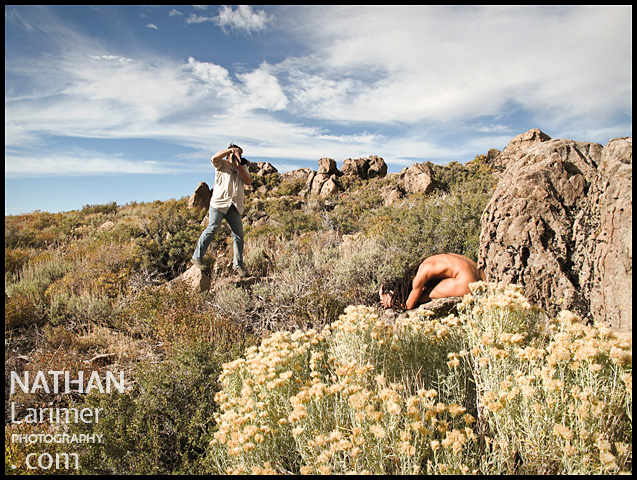
To check some of Nathan's beautiful images in northern California (and for a behind the scenes sneak peek of the first Digambara photoshoot), check out Nathan's blog @
Tuesday, October 18, 2011
Concerns About Elderly Silverback Cantsbee
Born in November 1978 and famously named by Dian Fossey, Cantsbee is the oldest mountain gorilla monitored by the Karisoke Research Center at 32 years old. The dominant silverback is beginning to show signs of his age and remained in his night nest throughout the entire day today. This behavior is clearly a cause for concern for all who have grown to love this benevolent leader of Pablo group...
Monday, October 17, 2011
Titus Gorillas Sleep Outside of Protected Park
For the first time in the history of the Karisoke Research Center’s monitored mountain gorillas, the Fossey Fund staff has observed an entire gorilla group sleeping outside of Volcanoes National Park...
Friday, October 14, 2011
The Bamboo Season
With the onset of Rwanda’s biannual rains, it is time for the bamboo season in Volcanoes National Park, when many of the mountain gorilla groups monitored by the Fossey Fund’s Karisoke™ Research Center make their way down to the “bamboo belt” near the park’s border. The Bwenge, Titus, Ugenda, Kuryama, Ntambara and Urugamba groups have already been observed at lower altitudes in the park, tempted by the prospect of tasty bamboo shoots.
When the groups of gorillas converge on the bamboo zone at the border, we are bound to see two things: an increase in interactions between groups and gorillas leaving their protected forests to venture out into the surrounding farmland....
Thursday, October 13, 2011
Authorities Concerned Over Baby Gorilla Trafficking
"Baby gorilla trafficking in eastern Democratic Republic of Congo appears to be on the rise according to the Congolese Wildlife Authorities (ICCN) following the recent rescue of a poached infant gorilla.
This latest incident is the fourth since April of this year - the highest number of baby gorillas on record confiscated from poachers in a single year."
Tuesday, October 11, 2011
New Mountain Gorilla Census Underway in Uganda
"In the past, there has been much debate about the Bwindi gorillas’ classification. Veronica Vecellio, Karisoke’s Gorilla Program manager, explained that the Bwindi population is of particular interest to primatologists because “they exhibit enough ecological and morphological differences from both Grauer’s gorillas and Virunga mountain gorillas that they could one day be classified as a separate subspecies.”
Click here to read my latest Fossey Fund E News article.
Click here to read my latest Fossey Fund E News article.
Thursday, October 6, 2011
Mountain Gorilla Ginseng
Ginseng, the 31 year old female mountain gorilla of Bwenge's group is rapidly deteriorating, despite the best efforts by the Fossey Fund's Karisoke Research Center and the Mountain Gorilla Veterinary Project.
Click here to read the latest post on the Fossey Fund's blog.
Click here to read the latest post on the Fossey Fund's blog.
Tuesday, October 4, 2011
Stress in Mountain Gorillas
Winnie Eckardt, PhD.: Studying Stress In Mountain Gorillas
(Fossey Fund E News article about my friend and roommate here at Karisoke, Winnie Eckardt.)

Photograph © 2011 for The Dian Fossey Gorilla Fund International
Subscribe to:
Posts (Atom)
